


PSG vs Arsenal · Champions League Final 2026 · Tactical Analysis
PSG Beat Arsenal on Penalties to Defend the Champions League: The Opta Data Behind a 1-1 Final in Budapest
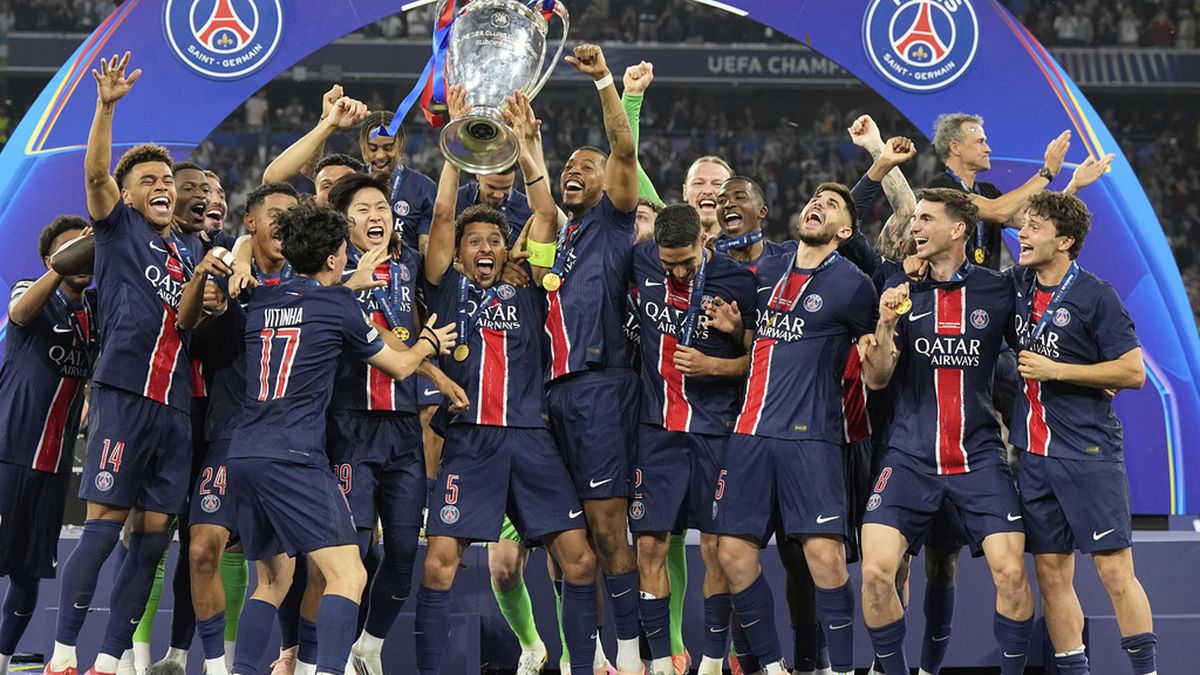
Paris Saint-Germain retained the Champions League on Saturday night, beating Arsenal 4-3 on penalties after a 1-1 draw at the Puskas Arena. Kai Havertz struck inside six minutes, Ousmane Dembele equalised from the spot, and then PSG strangled the game — Arsenal finished with just 24.7% possession, the lowest ever recorded in a Champions League final.
The Match in Three Opta Numbers
1.77 - 0.44
Expected goals (PSG - Arsenal)
PSG created roughly four times the chance quality of Arsenal across 120 minutes. Source: Opta.
21 - 7
Total shots (PSG - Arsenal)
Arsenal managed only seven attempts, with a single shot on target — Havertz's goal. Source: Opta.
24.7%
Arsenal possession
The lowest possession share by any side in a Champions League final since records began in 2003-04. Source: Opta.
How the Final Unfolded
Minute 6
Havertz strikes first
Arsenal landed the early blow. Kai Havertz finished high into the roof of the net to give the Gunners a shock 1-0 lead inside six minutes — almost against the run of what the rest of the night would become.
First half
PSG seize the ball
PSG responded by drowning Arsenal in possession. Arsenal completed just 69 passes in the entire first half, the lowest on record by any team in a Champions League final, as Luis Enrique's side pinned them inside their own third.
Minute 65
Dembele levels from the spot
Khvicha Kvaratskhelia was fouled in the box by Cristhian Mosquera, and Ousmane Dembele coolly converted the penalty to make it 1-1. From there the territorial dominance only deepened.
Extra time + pens
PSG hold their nerve
Neither side could find a winner across 120 minutes. In the shootout Raya saved from Nuno Mendes, but Eberechi Eze skewed wide and Gabriel Magalhaes skied his over the bar — and PSG won 4-3 to retain the trophy.
PSG Starting XI: Luis Enrique's 4-3-3 Webpart
Paris Saint-Germain are champions of Europe again. On a tense, suffocating night at the Puskas Arena in Budapest, Luis Enrique's side beat Arsenal 4-3 on penalties after the final finished 1-1 across 120 minutes, becoming only the second team to win back-to-back Champions League titles in the modern era of the competition.
It was not the open, end-to-end final the neutral might have wanted. Instead it was a demonstration of control. Arsenal struck first through Kai Havertz, but from that point PSG took the ball away from them and never gave it back, finishing the night with 75% of possession and an expected-goals advantage of 1.77 to 0.44 according to Opta. The trophy stays in Paris, and the manner of the win — total territorial domination broken only by the lottery of penalties — tells you almost everything about how the two teams approached the occasion.
How PSG strangled the final
The defining statistic of the night is Arsenal's possession: 24.7%. Per Opta, that is the lowest share of the ball by any team in a Champions League final since records began in 2003-04. Arsenal also completed just 69 passes in the entire first half — again, the lowest on record by any side in a final. Mikel Arteta's team, so often the ones who control games through the ball domestically, were turned into a reactive, deep-blocking unit for almost the whole match.
That was by design from PSG. Luis Enrique set up in his familiar 4-3-3, with Vitinha — later named UEFA's Man of the Match — anchoring a midfield triangle alongside Joao Neves and Fabian Ruiz. The instruction was simple: monopolise the ball, pin Arsenal's full-backs deep, and use Ousmane Dembele, Desire Doue and Khvicha Kvaratskhelia to attack the half-spaces in waves. PSG took 21 shots to Arsenal's seven, and only one of those Arsenal attempts hit the target all night — the Havertz goal itself.
The early concession could have rattled them. Havertz's sixth-minute finish, high into the net, was a brutal start. But PSG did not chase the game emotionally; they chased it structurally. They tightened the press, recycled possession patiently, and waited for the territorial pressure to manufacture an opening. When Kvaratskhelia was caught by Cristhian Mosquera inside the box just after the hour, Dembele did the rest from the spot.
Why Arsenal's plan backfired
Arsenal arrived in Budapest having conceded only seven goals across the entire Champions League campaign — the meanest defence in the competition. Their plan was clearly to defend that record: sit in a compact mid-to-low block, protect the box, and hurt PSG on transition and set pieces. For long spells the block held, and Gabriel and William Saliba threw their bodies in front of everything.
But the cost of that approach was a near-total surrender of the ball, and against a PSG side this comfortable in possession, the pressure eventually became suffocating. Once Dembele equalised, Arsenal had no obvious route back into the game because they had spent the night without it. Viktor Gyokeres and the attacking substitutes barely got service. The Gunners reached penalties not because they had wrestled control back, but because their defending — and David Raya's goalkeeping — bought them survival.
The shootout that decided it
For the first time since 2016, a Champions League final went to a shootout. David Raya gave Arsenal hope by saving from Nuno Mendes, but the Gunners undid themselves from twelve yards. Eberechi Eze skewed his effort wide, and then Gabriel Magalhaes — outstanding in open play for 120 minutes — skied the decisive kick high over the crossbar. Arsenal had missed the goal frame entirely with two penalties, and PSG took the shootout 4-3 to lift the trophy.
It was a cruel way for Arsenal to lose a final they had defended so stubbornly, and for Gabriel in particular it was a hero-to-villain swing of the kind only knockout football produces. For PSG, holding their nerve in that moment capped a campaign in which they scored 45 goals across the competition, matching Barcelona's 1999-2000 record for the most in a single European Cup / Champions League season.
Player ratings — the two-source view
Below are full player ratings for both squads, shown side by side from two sources: SofaScore's algorithmic match rating and NBC Sports' editorial ratings. SofaScore's model rewarded the players most involved in the key actions — Declan Rice topped the whole pitch at 8.1, with Raya (7.8), Joao Neves and Doue (7.7) close behind. The editorial view leaned more towards PSG's attacking threats, handing 8s to Doue and Kvaratskhelia. The two systems disagree most on Kvaratskhelia and Hincapie, which is exactly the kind of gap that makes a dual-source read useful.
The verdict
PSG retained the Champions League by imposing one of the most one-sided possession performances a final has ever seen, then surviving the only phase of the night where Arsenal had a real equaliser: the shootout. The 1.77-to-0.44 xG gap, the 21-to-7 shot count and that record-low 24.7% Arsenal possession are the numbers that frame it. Arsenal can point to a heroic defensive display and the cruelty of two missed penalties, but on the balance of play across 120 minutes, the better team in Budapest won.
Arsenal finished the final with 24.7% possession — the lowest share by any team in a Champions League final on record. PSG did not just beat them. They took the ball away from them entirely.
PSG vs Arsenal — Final by the Numbers (Opta)
PSG vs Arsenal — Key Opta Stats
| Metric | PSG | Arsenal |
|---|---|---|
| Final score | 1 | 1 |
| Penalty shootout | 4PENS | 3 |
| Expected goals (xG) | 1.77 | 0.44 |
| Possession | 75% | 24.7% |
| Total shots | 21 | 7 |
| Shots on target | 4 | 1 |
| First-half passes | — | 69 (record low) |
Player Ratings — PSG vs Arsenal
The Data Verdict
PSG retained the Champions League with one of the most dominant possession displays a final has ever produced: 75% of the ball, a 1.77-to-0.44 xG edge and 21 shots to Arsenal's seven, per Opta. Arsenal's 24.7% possession is the lowest on record in a final. They survived to penalties through a heroic defensive shift and David Raya, but two missed spot-kicks — Eze wide, Gabriel over the bar — handed Paris a 4-3 shootout win and a second straight European crown.