


Inter’s domestic double explained: how Coppa Italia glory adds €7m to a season already built on Champions League certainty
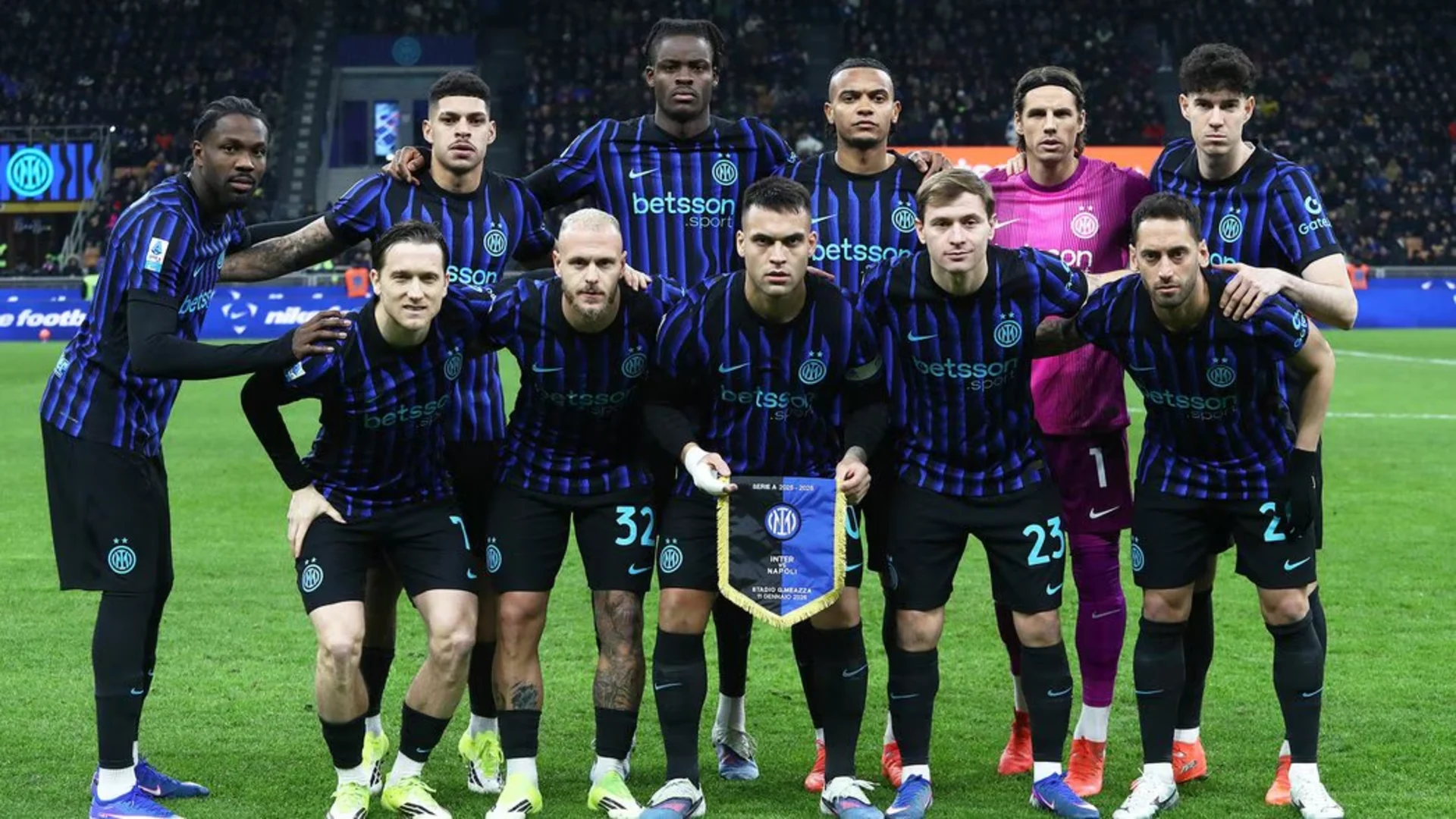
An editorial-style visual capturing Inter Milan’s pursuit of a domestic double, combining Serie A and Coppa Italia success. The scene reflects both the sporting triumph and the financial dimension of modern football, with symbolic references to trophies, match action at San Siro, and the broader economic framework of Italian football revenues.
Table of Contents
A trophy chase with millions on the line in Milan
Beyond the symbolism of silverware and the prestige of lifting multiple domestic trophies, Inter’s season is also being shaped by a more pragmatic reality: the economics of success. As the club prepares for a decisive Coppa Italia final in Milan, the possibility of completing a domestic double carries a financial impact that is far from marginal.
Winning both Serie A and the Coppa Italia would not only confirm Inter’s dominance in Italian football, but also translate into an estimated €7 million boost in additional competition-related revenue. In an era where the margins between elite European clubs are increasingly defined by financial structure as much as sporting performance, that figure is anything but incidental.
Serie A title: a foundation worth around €86 million
The first pillar of Inter’s earnings comes from the Serie A title race. Winning the Scudetto is expected to generate around €19 million in prize allocation for finishing first in the domestic standings, with overall league-related revenues projected to reach approximately €86 million, according to estimates reported by Gazzetta.
That figure marks a slight increase compared to the previous campaign, when Inter finished second and closed the season with roughly €84 million in Serie A distributions. The difference between first and second place, however, remains relatively modest at around €2 million, underlining a broader structural reality in Italian football: domestic dominance is prestigious, but not transformative on its own.
Coppa Italia: the €7 million incentive behind the final
Where the financial picture becomes more striking is in the Coppa Italia. Victory in the final would bring Inter just over €7 million, once prize money from earlier rounds and the final itself are combined.
This sum, while small compared to Champions League revenues, represents a meaningful addition within the domestic framework. It also reinforces how the competition continues to retain strategic value for top clubs, even as fixture congestion and European priorities increasingly dominate squad planning.
For Inter, the final is therefore not only a question of completing a domestic double, but also of consolidating a season in which every trophy carries layered sporting and economic significance.
Champions League guarantees already reshape the season
The most decisive financial driver of Inter’s campaign, however, has already been secured. Qualification for the Champions League ensured a substantial inflow well before domestic objectives were completed, bringing in approximately €50 million in combined revenues.
This figure includes participation bonuses of around €18.6 million, a variable European share estimated between €23.3 and €24.3 million depending on ranking coefficients, €8.6 million from non-European distributions, and additional minor allocations linked to seasonal standings.
In practice, Inter’s European certainty has already provided the economic backbone of the season, reducing pressure on domestic outcomes while still incentivising success on multiple fronts.
Supercoppa Italiana: the unpredictable variable
Looking ahead, the Supercoppa Italiana introduces another potential revenue stream, though its value remains uncertain. Much will depend on the competition’s format—whether it continues as a four-team tournament—and its geographical location.
The most recent edition held in Riyadh offered a clear reference point: the winner reportedly earned around €9.5 million, with an additional €1.5 million linked to a post-competition friendly arrangement. Finalists received approximately €6.7 million, while semi-finalists earned €2.4 million each.
However, those figures are not guaranteed for future editions. The competition’s financial structure remains heavily influenced by hosting agreements and commercial partnerships, particularly if staged outside Italy.
A season defined by margins, structure, and timing
Inter’s pursuit of a domestic double therefore sits at the intersection of sporting ambition and financial optimisation. The difference between finishing first or second in Serie A is relatively limited, but the accumulation of trophies still produces meaningful incremental gains.
More importantly, the combination of domestic success and Champions League participation illustrates the modern reality of elite European football: revenue is no longer shaped by a single competition, but by a carefully layered ecosystem of domestic titles, European performance, and commercial exposure.
For Inter, the message is clear. The Coppa Italia final is not merely an end-of-season showcase—it is another step in a season already defined by financial solidity and competitive control.
And in today’s football economy, even marginal gains can reinforce a club’s position at the top of both Italian and European football.
Related News
Europe's Top Playmakers: Bruno Fernandes & Lamine Yamal (2026)
May 28, 2026
# The Masters of the Assist: How Bruno Fernandes and Lamine Yamal Redefined Playmaking in 2025/2026 Dive deep into the 2025/2026 stats of Europe's best playmakers. See how Bruno Fernandes and Lamine Yamal are dominating with record-breaking assists.
Euro U17: Ebrima Tunkara, La Masia’s Next Chosen One, Ignites Spain’s Campaign
May 27, 2026
# Euro U17: Ebrima Tunkara, La Masia’s Next Chosen One, Ignites Spain’s Campaign Tactical analysis of La Masia prodigy Ebrima Tunkara’s masterclass for Spain U17 against Estonia (4-1) in the Euro U17 opener. A deep dive into Barcelona's next star.
Where to watch Manchester City vs Aston Villa in canada: on TV, Live Stream
May 24, 2026
# Where to watch Manchester City vs Aston Villa in Canada : on TV, Live Stream Match date: 24 May 2026. Live TV channels to watch Manchester City vs Aston Villa live stream. Check out fixtures, schedule, predictions, stats and live scores.
How to watch Crystal Palace vs Arsenal in the Australia: Live Stream and TV
May 24, 2026
# How to watch Crystal Palace vs Arsenal in the Australia: Live Stream and TV Match date: 24 May 2026. Live TV channels to watch Crystal Palace vs Arsenal live stream. Check out fixtures, schedule, predictions, stats and live scores.